North Yellowstone: Mammoth Hot Springs & Bunsen Peak
Just about every corner of Yellowstone National Park is home to something special. And the northern part of the park is no exception, as it’s here that you’ll find the stunning travertine pools

Just about every corner of Yellowstone National Park is home to something special. And the northern part of the park is no exception, as it’s here that you’ll find the stunning travertine pools

Located in the western part of Yellowstone, Norris Geyser Basin is home to hundreds of hydrothermal features like geysers, mud pots and fumaroles. While it may not be as well-known as Upper Geyser Basin

At over two million acres, Yellowstone has a bit of everything – geysers, wildlife, a large lake, and a scenic 20-mile canyon, the latter of which we’ll be focusing on in this guide.

Aside from its geysers, if there’s one thing Yellowstone is known for, it’s wildlife. While you’ll inevitably have a few chance encounters while exploring the park, where should one go in hopes of
For those with several days in Yellowstone, exploring Yellowstone Lake is one of the top things to do in the park. The lake covers 136 square miles, and with 110 miles (180 km)

Established on March 1, 1872, Yellowstone National Park is the world’s very first National Park. While the US is now home to over 60 such parks, visiting Yellowstone remains a unique experience thanks to

As its name suggests, Grand Teton National Park is most known for its stunning 40-mile-long Teton Range. From all throughout the park, one can enjoy unobstructed views of the mountains, whether it’s from the

As its name suggests, the highlight of Grand Teton National Park is viewing the Teton mountain range from a variety of angles. But when it comes to hiking, the park either has numerous

Idaho’s Craters of the Moon National Monument & Preserve is an overlooked gem. But while the park does indeed contain many craters, it doesn’t quite resemble the moon. Instead of dust, the park

Southern Idaho is often overlooked in favor of neighboring states. But Twin Falls and its surroundings – particularly the stunning Shoshone Falls and Box Canyon – make for the perfect stopover when traveling

Utah has so many incredible locations – many of which remain relatively unknown – that it would probably take a lifetime to explore them all. With that said, this Utah Mighty 5 road

Utah is home to five incredible National Parks that are collectively known as the Mighty 5. But nobody can seem to agree on which is best. After ranking Utah’s Mighty 5 in my head,

The Great Salt Lake is among the saltiest bodies of water in the world, while it’s also among the largest lakes in the western USA. It’s such a big deal that they even

Most people will visit Canyonlands National Park’s Island in the Sky district via a smooth, paved road from central Moab. But if you have the right vehicle, driving up the many switchbacks of

Dead Horse Point State Park is situated atop the same mesa as Canyonlands National Park’s Island in the Sky district. As such, it offers similar views. But as it’s outside the National Park

Arches National Park, just outside of Moab, Utah, is home to over 2,000 natural arches. But while many of them are inaccessible, you can expect to see a few dozen of them while

While Zion’s Angels Landing and The Narrows are renowned for being some of the most unique hikes in the country, Arches National Park‘s Fiery Furnace should definitely be included in that conversation. While

The Needles is the southernmost of Canyonlands National Park’s three main districts. But there’s no way to drive there directly from the Island in the Sky, the park’s most popular area. As such,

Established as recently as December 2016, Utah’s Bears Ears National Monument consists of a staggering 1.36 million acres. While it does indeed include beautiful scenery, the land is largely being protected due to

Canyonlands National Park is the largest of Utah’s Mighty 5. It’s comprised of multiple different districts such as The Needles, the Maze and the Island in the Sky, the latter of which is

Located at the southern end of the San Rafael Swell, Goblin Valley State Park is known for its thousands of hoodoos which, with a bit of imagination, can make you feel as if you’re

Just east of Capitol Reef National Park – an underrated destination in its own right – are even more obscure geological landmarks that relatively few have heard of. Everyone driving along Utah State

Established in 1971, Capitol Reef National Park has a bit of all the things that Utah’s other parks are famous for – arches, hoodoos, canyons and stunning overlooks. But it’s easily the least

Cathedral Valley may be part of Capitol Reef, but it looks and feels like an entirely different park. The district is most known for two main sections: the Bentonite Hills and the Temples of

After dealing with stressful hike permit lotteries and timed entry systems at other Utah parks, visiting Capitol Reef National Park is a breath of fresh air. The park’s flagship hike – Navajo Knobs

The southern half of Utah is home to so many parks and unique landmarks that plenty of great destinations get lost in the shuffle. Kodachrome Basin State Park is one such overlooked site.

Hiking The Narrows is a one-of-a-kind experience that has you hiking through a gorge cut out by the North Fork of the Virgin River. In other words, the river is the trail! And

Zion National Park’s Angels Landing is one of America’s most thrilling hikes, as the final section can only be traversed by grabbing onto metal chains. But thanks to its uniqueness, the hike has

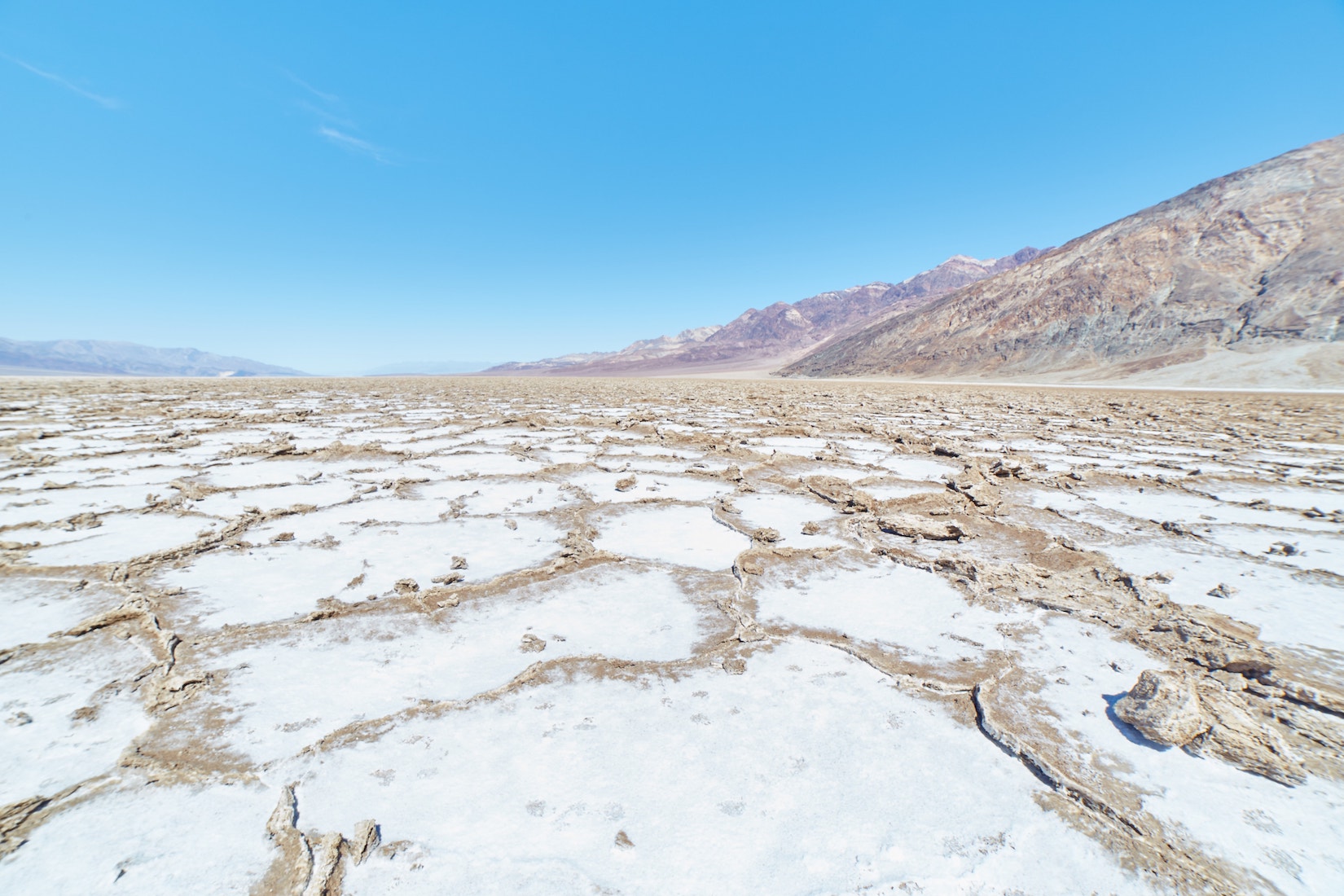
Death Valley National Park is one of America’s largest parks and also one of its most diverse. Infamous for its extreme summer temperatures, the park can also get surprisingly cold in the mountains

Given the massive size of the National Park and how distant its main landmarks are from nearby towns, planning a perfect Death Valley itinerary is extremely tricky. There are also plenty of other

Death Valley National Park is the United States’ largest park outside of Alaska. While many picture it as a lifeless desert, at over 3 million acres, few other parks offer as much variety

The Golden Canyon and Gower Gulch Loop Hike is arguably the quintessential Death Valley hike. Over the course of a few hours, it takes you through the harsh and lifeless – yet stunningly

While far from the type of excursion most people picture when they think of Death Valley, hiking Telescope Peak is one of the park’s most thrilling and rewarding adventures. The National Park may

Racetrack Playa and its sailing stones have mystified scientists and adventurous travelers alike for over a century. Situated in a remote and hard-to-reach part of Death Valley National Park, the playa is a

At half a mile wide and up to 777 ft deep, Ubehebe is Death Valley’s largest crater. While visitors have the option to simply overlook the colorful crater from the parking lot, more

The massive Mojave National Preserve, located between Joshua Tree and Death Valley, is one of California’s most overlooked outdoor destinations. The towering Kelso Dunes alone are worth the trip, while other parts of

Spreading out to nearly 800,000 acres, Joshua Tree National Park is the place where the Colorado and Mojave deserts converge. Millions of visitors flock to this harsh desert environment each year to admire its uniquely

While easily one of the most thrilling hikes in southern California, the Ladder Canyon and Painted Canyon Loop Trail often gets overlooked. It’s not a part of any major park system, nor is

At over 600,000 acres, Anza-Borrego Desert State Park is California’s largest State Park. For reference, if it were a US National Park, it would rank among the top twenty largest. As such, you

Just north of San Diego is a gorgeous State Park that doesn’t quite get the attention it deserves. The Torrey Pines State Natural Preserve is home to the Torrey pine, one of the rarest

Right in the center of the Baja Peninsula is one of the largest coastal dune sheets of North America. But despite it often appearing on lists of ‘Top Places to Visit in Baja,’

With the native languages and traditions of Baja now largely extinct, the peninsula’s numerous cave paintings are all that remain of the ancient cultures that once lived here for millennia. In fact, sites

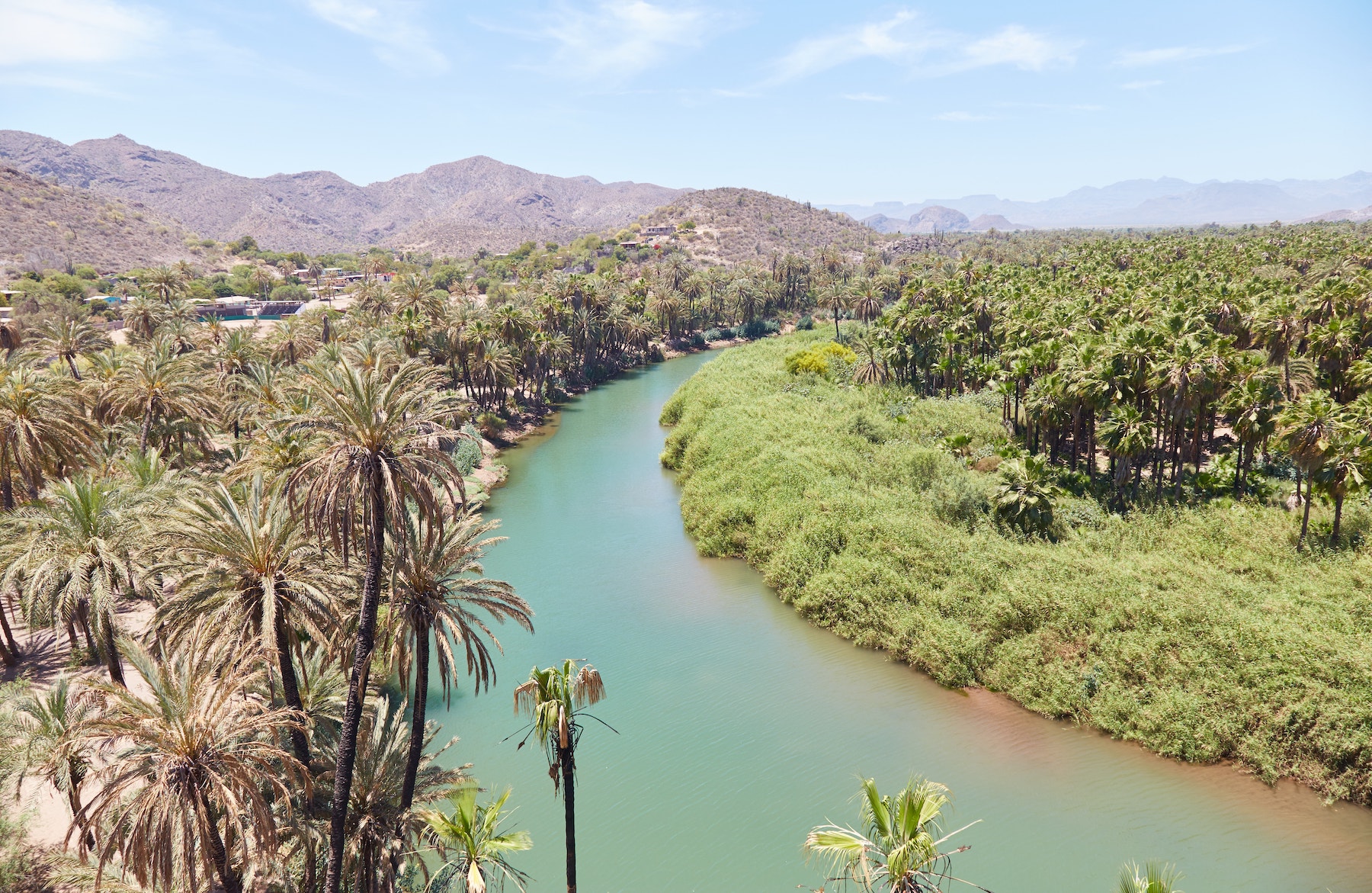
A small town of under 4,000 residents in the southern part of the Baja Peninsula, Mulegé is about as remote as it gets in Mexico. But while experiencing the town can be challenging in

For such a small town, Baja California Sur’s Loreto has a lot going for it: historical buildings, beaches, mountain views and an abundance of wildlife. In the following Loreto guide, we’ll be covering

La Paz, a city of 250,000 residents, is the capital and largest city of Baja California Sur, one of Mexico’s most sparsely populated states. While long overshadowed by the nearby resort city of

About 60 km north of Mazatlán is one of Mexico’s most obscure – and most unusual – archaeological sites. You won’t find a single pyramid or tomb at Las Labradas, but you will encounter

Sinaloa’s Mazatlán is among Mexico’s most scenic coastal cities – both in terms of its natural surroundings and its colorful architecture. And among Mexico’s many beach towns, it arguably has the widest variety of

The Nayarit state capital of Tepic is far from being one of Mexico’s most talked-about cities. Frankly speaking, the main thing it has going for it is its location. Situated between the tourism

Colima, situated between Jalisco and Michoacán, is one of Mexico’s smallest states. Nevertheless, it has quite a variety of things to do while remaining largely undiscovered by tourists. In the following Colima guide,

Like the state of Colima as a whole, the archaeological sites of La Campana and El Chanal, both located in the state capital, are seldom talked about. But these were once the most

Guachimontones, reachable as a day trip from Guadalajara, is the state of Jalisco’s flagship archaeological site. It’s most known for its unique round pyramid (itself known as a ‘guachimontón’), of which there are

Jalisco and its capital Guadalajara are where many of the things so commonly associated with Mexico – like sombreros, tequila and mariachi – were born. And with its metropolitan area consisting of 5,250,000 people,

The state of Guanajuato, home to San Miguel de Allende and Guanajuato city, is one of Mexico’s premier tourism destinations. But despite its capital León being one of Mexico’s largest cities, few tourists visit. In

Aguascalientes, located in the state of the same name, is one of the lesser-visited cities of Mexico’s Bajío region. And frankly speaking, few would consider it the country’s prettiest big city. But among Mexicans,

As with nearby Guanajuato and San Luis Potosí, the city of Zacatecas grew immensely wealthy as a mining town, with much of that wealth being reinvested into beautiful buildings. As we’ll cover in

Located about 56 km south of the city of Zacatecas is one of Mexico’s most overlooked and mysterious archaeological sites. Was La Quemada merely an outpost of a mightier civilization further south, or was

The former mining town of Real de Catorce is one of Mexico’s most fascinating destinations. But being located in a remote part of the country at an elevation of over 2700 m, it’s

Photos alone can’t truly convey what a place is like, and without visiting, it can be hard to tell many of Mexico’s old colonial cities apart. But San Luis Potosí’s historic center is arguably

Those who happen to come across images of the Tehuacán-Cuicatlán Biosphere Reserve, with its countless towering cacti as far as the eye can see, often wonder how to go about planning a visit.

Mexico is home to countless colonial-era towns and cities, many of which have been designated as Pueblos Mágicos (Magic Towns) by the government. But not all of them are equal, with some consisting of little